Block Puzzle Tips: How to Score Big and Keep Playing
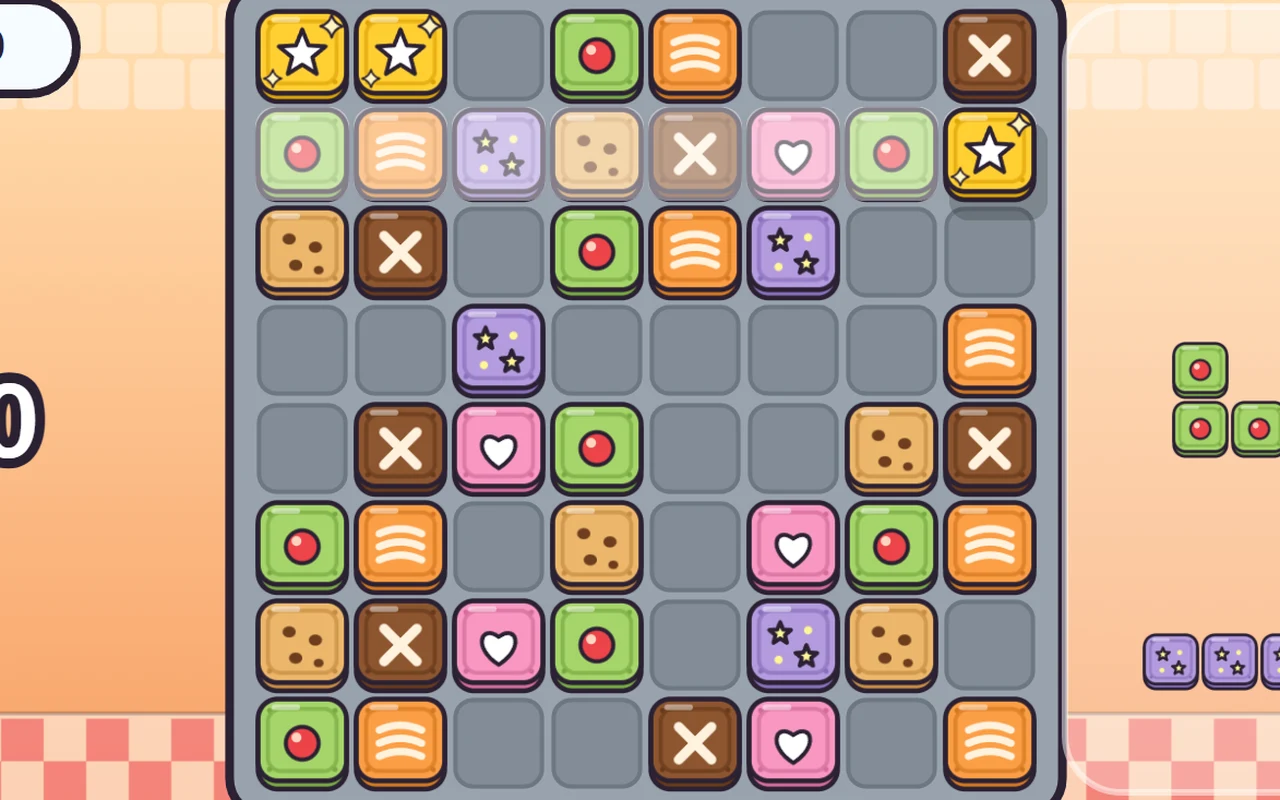
Block puzzles look simple: drag pieces onto a grid and fill lines to clear them. But the grid fills up fast, and one awkward piece can end your game. Here is how to read the pieces you are given, keep room for the big ones, clear several lines at once, and handle levels with goals, move limits and tricky squares.
How it works
You get a square grid and a few pieces at the bottom of the screen, usually three. Drag a piece onto the grid and drop it. When a row or a column is completely full, it clears and frees that space. In most block puzzles, pieces cannot be turned, so a bar lying flat stays flat.
When all the pieces are placed, new ones arrive. The game ends when none of the pieces left can fit anywhere on the grid. That is the only way to lose, so the whole game is about keeping room. In our block games, the grid is 8 by 8, a shadow shows where the piece will land, and the lines about to clear light up.
Look at all three pieces first
Before you drop anything, look at the three pieces together and ask: where can the biggest one go? Big squares and long bars are the hardest to fit, so place them while there is still room, or make sure a space is waiting for them.
Then think about the order. Sometimes placing a small piece first clears a line and opens the space the big one needs. If you drop the pieces in a random order, the last one may have nowhere to go.
Keep the grid clean
Build from the edges and corners, and keep the middle open. A wide empty area can take any shape, while small scattered holes only fit tiny pieces.
Avoid leaving single empty squares boxed in by blocks. Only a one-square piece can fill them, and you may wait a long time for it. When you can, keep a long empty row or column ready: it is the perfect spot for the next long bar.
Clear several lines at once
Clearing one line at a time keeps you alive, but clearing two or three together scores much more. In our games, you get 1 point for each square you place, and the line bonus grows fast: 10 points for one line, 40 for two at once, 90 for three.
To set it up, build two rows side by side that are almost full, with their gaps lined up. Then one piece, like a square or a bar, fills both gaps in one move. A row and a column that cross can also clear together. Do not get greedy, though: if the grid is getting crowded, take the single line and make room.
Goals, move limits and tricky squares
Many block puzzles have levels with a goal, like clearing a set number of lines. In our games, from level 4, your moves are limited too: the counter in the top right turns red when only 3 are left. Then every piece should help finish a line, not just fill space.
Levels can also start with stone squares already on the grid, which go away when you clear their line, and ice squares that need two clears: the first one only cracks them. Work on the ice early, so you are not stuck at the end needing one last line with no moves left. If you fail, you simply restart the level.
Try our block puzzle games
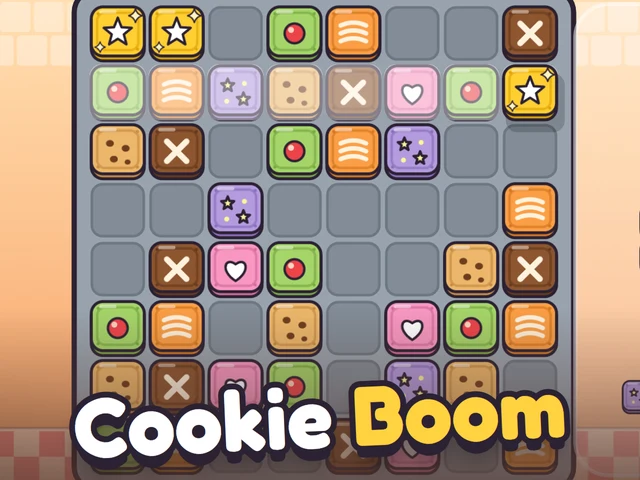
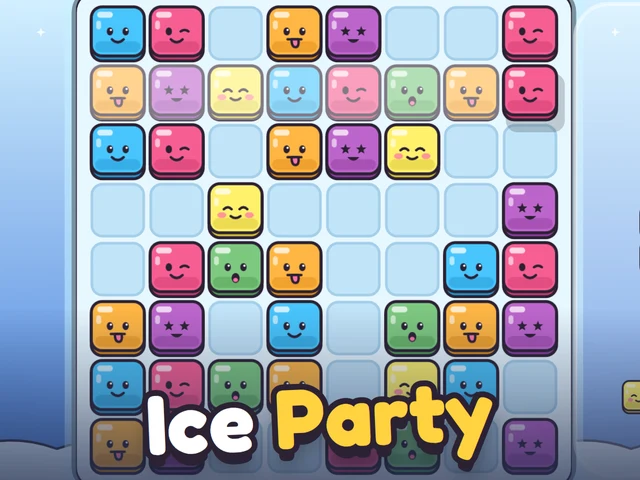
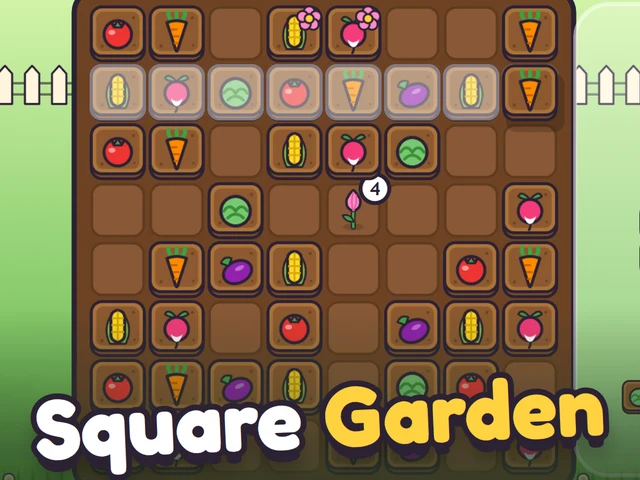
Cookie Boom hides a golden cookie in some pieces, and a line that holds it scores double. In Ice Party, clearing lines move after move builds a freeze combo that multiplies your points. Square Garden grows pink buds: cover one and finish its line before it wilts after 6 moves, and a flower blooms for 50 points.