Runner Games Tips: How to Pick the Right Gates Every Time
In gate runner games, your hero runs on their own and you only steer left or right. It sounds easy, but every row of gates is a small math question, and one wrong swipe can cost half your crowd. Here is how to compare gates fast, pick the lesser evil, dodge obstacles and reach the finish strong enough to beat the boss.
How it works
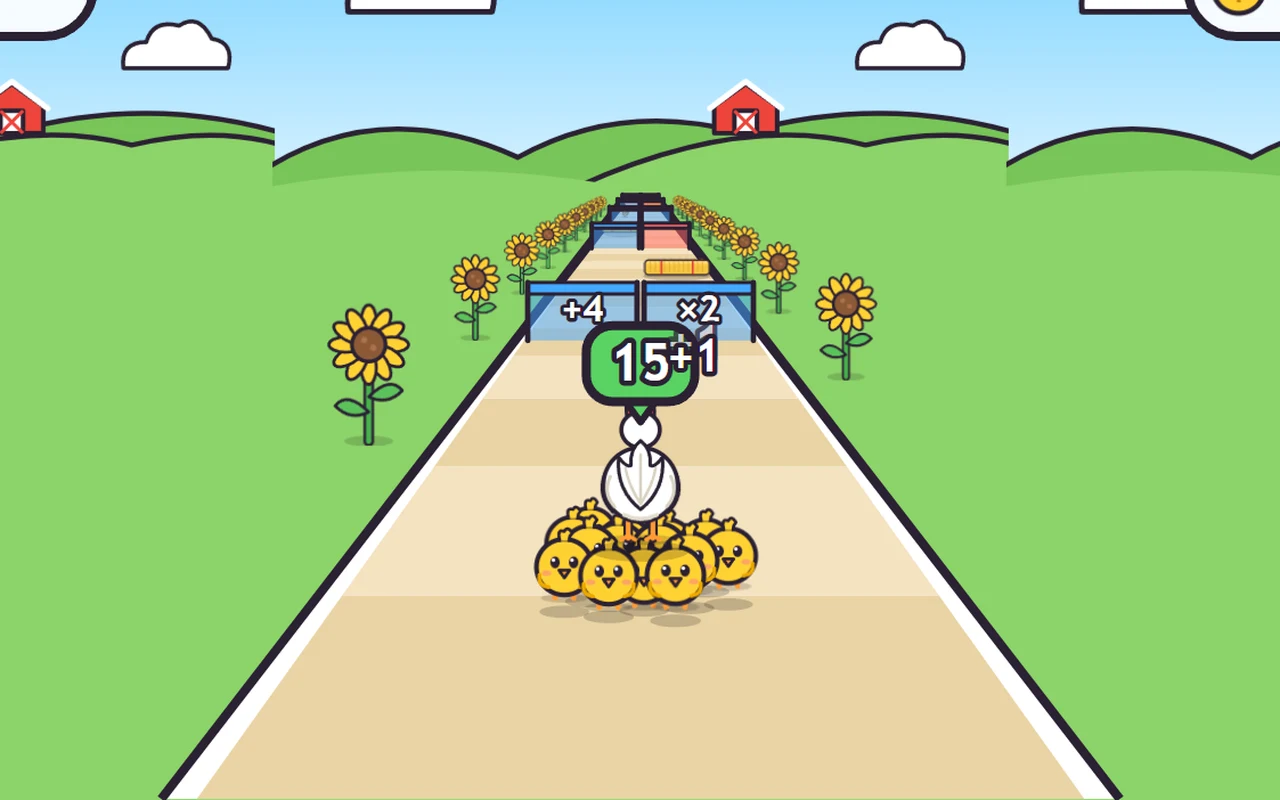
You swipe left or right while your hero runs down the track. Rows of two gates block the way, and you always go through one of them. Blue gates are good: they add (+) or multiply (×) your group. Red gates are bad: they take some away (−) or divide it (÷). Obstacles knock off part of your group, and small bonuses on the track add one more.
If your group drops to zero, the level is lost and you start it again. At the finish, a staircase rewards the size of your group: the bigger it is, the higher you climb and the more coins you win. In our runners, the stairs go from ×1 to ×6.
Two blue gates: plus or times?
Sometimes both gates are blue, like +10 or ×2. Do not just pick the bigger-looking number. Count your group first, then work it out. ×2 doubles what you have, so it only beats +10 when you have more than 10. With 6, +10 gives 16 and ×2 gives 12. With 25, +10 gives 35 and ×2 gives 50.
A quick trick: ×2 adds as many as you already have, and ×3 adds twice as many. Compare that with the plus number and you have your answer. Early in a level your group is small, so plus gates often win. Later, when the group is big, times gates usually do. In our games, from level 5, the shiny × gate is sometimes the wrong choice, so always count.
Two red gates: pick the lesser evil
Harder levels may give you two red gates. Then you choose the one that hurts less. ÷2 always takes half your group, while a minus gate takes a fixed number. So with a big group, the minus gate usually costs less, and with a small group, ÷2 is safer.
Example: with 30, −10 leaves 20 but ÷2 leaves 15. With 12, −10 leaves only 2 but ÷2 leaves 6. In our games, from level 6, one red gate can wipe out your whole group at once, so never cross a red gate without reading it.
Dodge obstacles and grab bonuses
Obstacles cost part of your group, and on harder levels a bigger part. In our runners there is always a free way past, so look further down the track, not just at your hero. Swipe early and smoothly: last-second swipes are how most runs go wrong.
Pick up the small bonuses when it is safe. One extra unit looks tiny, but the next × gate you take multiplies it too. And think one row ahead: if two gates are almost equal, choose the side that sets you up for the next obstacle or the next good gate.
Get ready for the boss
In our runners, from level 3, a giant crowd blocks the whole track just before the finish. Its strength is shown in a red bubble. It takes that many from your group, and if you reach zero, you lose. You cannot dodge it, so the whole level is really preparation for this moment.
The boss is made to be beaten by good choices, not by luck. If you keep losing to it, replay the level and look for the gates you got wrong. One missed ×2 early on makes a huge difference by the end.
Spend your coins wisely
Before each run in our games, you can spend coins on three upgrades. Start gives you 2 extra units on top of the usual 5. Value gives you 25% more coins. Shield lets you hit one obstacle without losing anything.
A bigger start is strong, because every good gate after it grows it again. The shield helps on levels full of obstacles. Three stars need a result very close to the best possible, so if you got one or two, replay with what you learned about each row.
Try our runner games
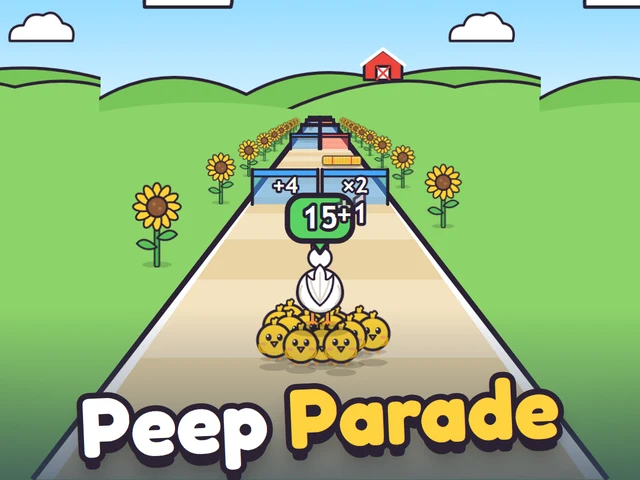
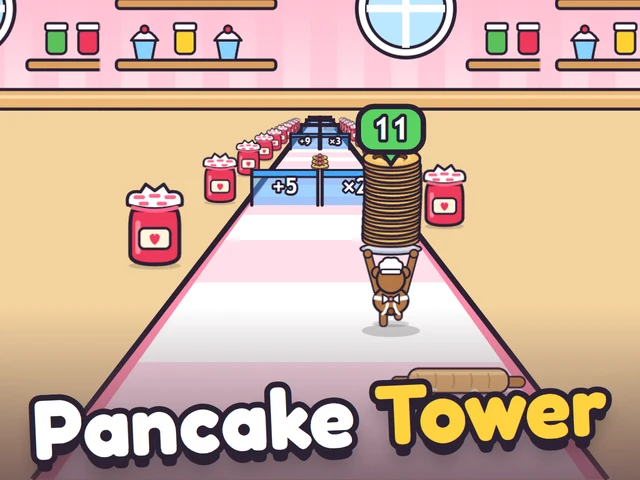
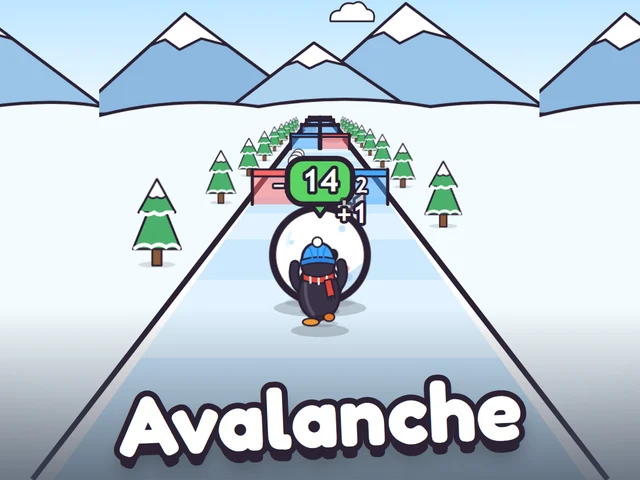
In Peep Parade, a mother hen leads a flock of chicks across the farm. In Pancake Tower, a bear chef stacks pancakes on his tray, and in Avalanche, a penguin pushes a snowball that grows with every good gate.