Draw to Save Puzzle Tips: One Line to Win Every Level
In draw to save puzzles, a single line is all you get to protect a hero, guide it or carry it across a gap. Then physics takes over, and you can only watch. Here is how to plan your line before you draw, save ink, learn from a failed try, and solve the three classic kinds of levels: shelters, slopes and bridges.
How it works
You draw a line with your finger. When you lift it, the level starts: things fall, roll and move on their own, and your line becomes a real object. Depending on the game, it either falls like a solid piece or stays fixed where you drew it. You win if the hero is safe at the end.
Ink is limited, so your line has a maximum length. In our games, a bar with a pencil shows how much ink is left, and the line also stops by itself if it touches a block or the hero.
Look before you draw
You only get one line, so think first. Find the hero, the danger and the goal. Then imagine the moment you lift your finger: what will fall, roll or walk, and where will it go?
Be careful with your first idea. The obvious line, straight across, flat, or on the wrong side of an obstacle, is often exactly what the level is built to beat. In our games, from level 4, those easy lines are tested and made to lose.
Shelters: build a dome that stands
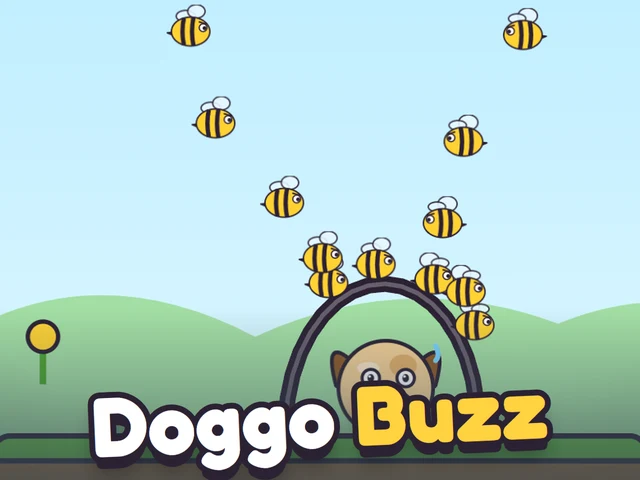
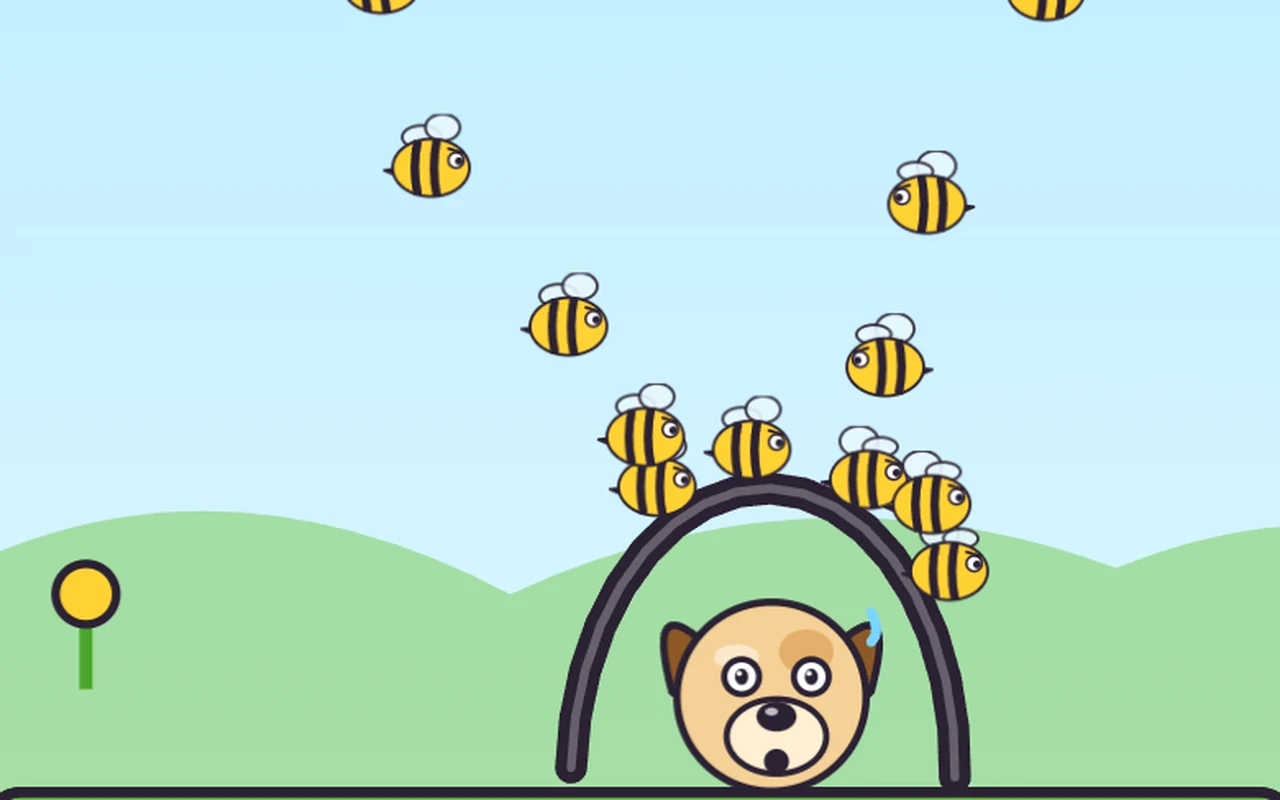
When bees or other creatures dive at the hero, draw a roof. A dome shaped like an upside-down U works best: its curve covers the top, and its two legs rest on the ground on each side of the hero.
If your line falls, draw it a little above the hero and wide enough, so it lands around him, not on him. Make both legs reach the ground, or the shelter may tip over. If the hero sits on a step, make one leg longer. Check the bottom edges too: a small gap near the ground is all a bee needs.
Slopes: catch gently and roll
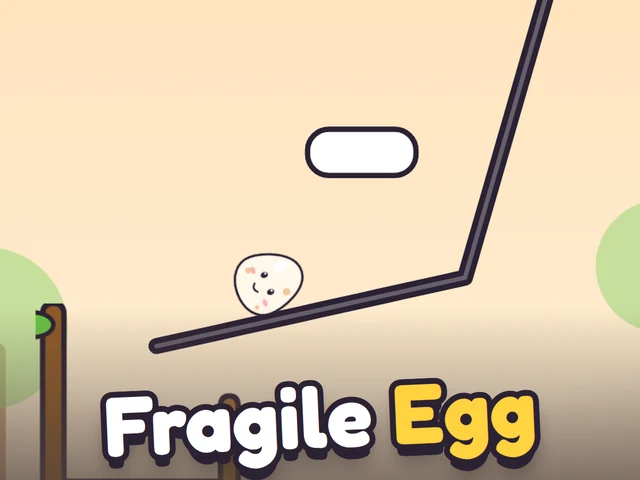
When a fragile hero falls from above and must reach a target, draw a slope that catches it and rolls it there. Start the slope just under the drop point, so the hero does not fall far before landing. Keep it gentle: a steep slope builds speed, and a hard landing can break it.
End the slope right at the edge of the target, not in the air before it. If a cloud or a rock blocks the straight path, curve around it without touching it: in our games, a line that touches a block stops right there.
Bridges: from edge to edge
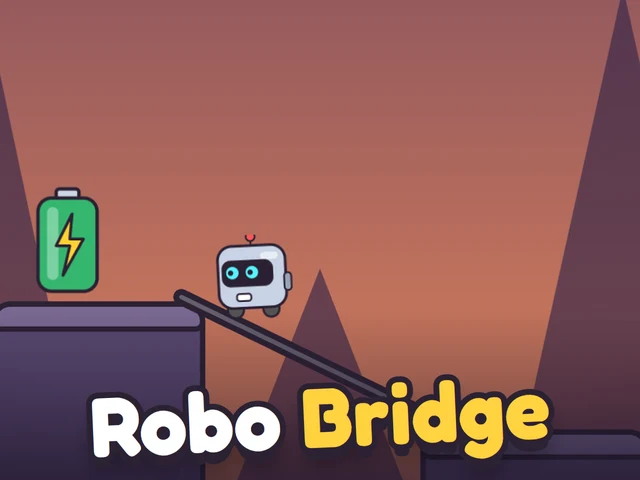
When the hero walks on its own, your line is its road. Start it on the ground where the hero stands and end it on the far side, a little onto solid ground. A bridge that is too short leaves the hero falling into the gap.
Keep the bridge smooth and not too steep, because a walking hero cannot climb a wall and may get stuck. If a rock hangs over the gap, keep your bridge low enough for the hero to pass under it.
Save ink and learn from each try
Ink runs out faster than you think, so draw one smooth curve, without wiggles or loops. If the ink ends halfway, your line ends there too.
When you lose, do not redraw the same thing. Look at what went wrong: did the shelter tip, did the hero drop too far, did it slip off the end? Change one thing and try again. In our games, you earn 3 stars on the first try, 2 after a few tries, and 1 with the hint. The light bulb hint costs 15 coins and shows the winning line in dots, with a hand that traces it.
Try our draw to save games
In Doggo Buzz, your line falls and becomes a shelter that must protect the puppy from bees until the countdown ends. Fragile Egg asks for a gentle slope to roll a falling egg into its nest without a crack. In Robo Bridge, the little robot walks by itself, so your bridge must carry it over the lava to its battery.